Thursday, March 31, 2011

Bosse

"3" Demo

It's strange to know that some of the best music will go unnoticed.

Echoes of the Forgotten
Hailing from New York, Bosse, the solo project of Richard Bosse, has for the past four years (or so) been quietly providing the world with gorgeous folk-ish, ambient-laced music. One could almost draw a comparison to such neofolk greats as Ulver (Kveldssanger era), later Empyrium, and Vàli, but Richard creates a sound all of his own - echoing his dismal urban surroundings through stark, almost harsh clean guitar tone contrast against the warm sounds of his fingerpicked classical guitar with distant machine sounds in the background. Everything is dead - scraped skies, concrete scars, the very Earth baring its steel fangs, and yet there is beauty in this very desolation, something so very putrid that it is awe-inspiring.


I distinctly remember some attention heading Bosse's way in 2008 with the release of his full-length and a split release with a certain Trancelike Void from Belgium, yet from then on Bosse moved further back into obscurity, remaining silent until 2010's release "Dreams of the Dead," a further delving into his unique, droning style.


Stark, contemplative, beautiful: all words that describe Bosse, and yet they don't do Richard's work any justice. Truly a one-of-a-kind project. Get into it.


-Jon

Wednesday, March 30, 2011

Colosseum - Parasomnia (2011) [Firebox Records]

Welp, this is my inaugural Inarguable review (that's a tongue twister if I ever read one) and I decided to tackle this monster of a funeral doom masterpiece, Colosseum's latest (and sadly, probably last) offering. "Chapter 3: Parasomnia," in my eyes, is easily the strongest release in the funeral doom world so far this year.
   
Kicking off with the beautiful "Dilapidation and Death," the atmosphere created in the beastly opening riff doesn't waver for a second throughout the track's 20+ minute duration. The interplay of the keys and riffs have always been Colosseum's strong point and it's showcased perfectly here. Hell, the last half of the track is drenched in so much sincere, epic melancholy I damn near started weeping right then and there. Juhani Palomäki and Olli Haaranen take tried and true funeral doom riffing and flair it up a bit with some great variations that shine through the gloom like little beacons of frail hope only to be drowned in the thunder of Colosseum's roaring onslaught. Very tasteful use of the keys to highlight the riffing while simutaneously adding a heaping layer of etheral atmosphere to everything.  This song climbed to the top of the heap as one of my favorite songs of the genre within it's first listen. It's a doozy and if it doesn't leave you feeling genuinely depressed, you just might in fact be of the robotic persuasion. It alone is reason to check this release out.

With the first song's ringing death knell, the listener is given a moment to climb out of the grave and get a little air for a few minutes with "Questioning Existence." A winding, disorienting instrumental, it's a bit of a "throw away" track in relation to the weightiness of the rest of the release but it's gorgeous in it's own right and props the listener back up for the next leviathan of a song coming their way.

"Passage To Eternity" roars out of the gate with Palomäki's signature bellow. Thundering, droning bass and HUGE tom hits continue throughout, ushering in that all too familiar sepulchural organ to carry away the souls of each and every one of us. Becoming strangely triumphant halfway through before sinking back into the mire of desperation, this track just might be the epitome of  a song reaching a truely dreadful sense of  hopelessness. Abandon all hope ye who have made it this far.

"On The Strand of Nightmares" is a bit more of an up-beat beast. Now, I know what you're saying. "Nate, I get bored with a funeral doom album after the first couple songs. What makes you think I'm still listening this far in?" Well, my dear ADHD afflicted friend, it's because Colosseum hold the keys to writing successfully engaging funeral doom. In a genre so hell-bent on slower than molasses in a wheel-chair tempos, the trick is varying things up to keep it sounding "fresh" (in as deathly a sense of the word as possible.) Within this song, Colosseum incorporate some nice swaying, mid-tempo rhythms and elegant bends into their strings and even some sparse clean chants to liven things up a bit. The keys take a bit more of a front seat here too but not in an annoying way, moreso in a "cinematic" tone.

And finally, as if you weren't feeling bereft of all hope and any feeling this side of sunny yet, "Parasomnia" ends things in a ghostly, cryptic fashion. Meandering with clean chords and airy keys, it starts off dream-like enough. But much to peace's dismay, that all ends when the band lurches us back into plodding, crushing waves of doom. Doing the definition of the word "parasomnia" justice, the track becomes a real nightmare, almost feeling like it's coming unhinged as it progresses with the riffs truding along as the keys do their own epic swaying atop them, creating a bit of a disorienting effect. When the album draws to a close, the listener as experienced a true swansong. Not long after the writing and recording of the album, lead guitarist/vocalist/songwriter Juhani Palomäki tragically passed away. "Parasomnia" is not only the final masterpiece penned by one of the genre's most prolific groups but also by one of it's most beloved and gifted songwriters.

- Nate

Interview with Varg Vikernes of BURZUM

Well, at long last, here it is - our interview with the infamous Varg Quisling Vikernes of the one and only Burzum. This is definitely a once-in-a-lifetime experience and I would like to extend my thanks to Liz and Dave of Earsplit PR and to all of you who contributed questions, but enough of my banter - here you go: 

Thank you for the interview, Varg. It is truly an honor and a privilege.

Thank you for the interest.

In the past you have chosen some catching and interesting artwork for your albums. At one time you used the work of Theodor Kittelsen and now you are using a piece by William-Adolphe Bouguereau. What was the reasoning behind the choice of the Bouguereau piece for the cover of Fallen?

First of all it was used because it fits the theme of the album perfectly, Further, it reminds us of a more romantic era, and is also of exceptional quality.  Bouguereau was really a very skilled artist.

What inspires you to use random and unconventional elements of “found sound” on your recordings (the electric kettle, for instance)? Is there something in your creative process that causes you to notice the potential of everyday things as “instruments”?

Possibly, or perhaps probably. Every time I record something I try to improvise one or more tracks, usually the introductions and conclusions, and this time I used – amongst other things – the electric kettle you refer to in this context. I figured it would sound much like a spring if we recorded it as it boiled water – and it did.

Do you have any plans to reintroduce keyboards in the future?

Yes, and the only reason we haven't seen any keyboard on post-prison Burzum yet is the fact that I haven't set up my own keyboard home yet, and the fact that there was no keyboard in Pytten's studio when I recorded any of the post-prison albums. In the past I used “free time” in the studio to make music on “new” instruments which happened to be there, and I may add that a track like “Tomhet”, for example, was actually improvised in the studio when recording the album. All you need is some spare time in an inspired moment and an unfamiliar instrument, the stranger the better, and new music will come to you...

Do you feel your musical voice has evolved or changed since your first wave of albums in the early '90s? If yes, how so?

It changed because I wanted it to change; I wasn't happy with it as it was. It changed a lot (for the better) from the début album to “Det som engang var”, and from “Hvis Lyset tar oss” to “Filosofem”, and also a lot from “Filosofem” to “Belus” and “Fallen”.

When you write an album or a song, which comes first as far as maybe a handful of riffs or a concept? What is your recording process like?

The first to come are the riffs, then songs, and when all the songs are there I find a concept and write the lyrics. When I record I record one instrument at the time, then the vocals, and finally we mix it. I make the introductions and conclusions after I have recorded all the other tracks, and then mix it all.

When did Norse mythology and Asatru become a part of your life? How has it affected your life overall?

Well, I am not religious, so I wouldn't say Asatru is a part of my life, but Norse mythology has always been a part of my life. I am Norwegian, you know, and I grew up in Odinsvei (“Odin's Road”). The Norse culture is very much a part of me, as are the Norse values and virtues, ideals and ideas, and this has affected my life greatly I think .

What is your opinion on the new wave of American black metal bands? Are there any metal bands or current music groups/composers that you find to have merit? 

I don't know any of them, so I cannot answer this questions any better than telling you that I have no opinion on any of them, in any way. Black metal is of no interest to me.

What sort of crops do you cultivate on your farm? How has this newfound seclusion affected you as a musician and songwriter, if it has at all?

No crops at all. The farm is located in the mountains and is surrounded by heavy forest. It used to be a goat farm. The seclusion isn't really newfound either, as I have always managed to “seclude” myself from bad influences no matter where I have been. So I don't think this has influenced me much at all as a musician and songwriter.

The drums on your past 2 albums have had a rather unique tone. How did you record them?

We recorded bits and parts of the drum tracks, and then did a whole lot of “cutting and pasting” to complete the tracks. We recorded everything digitally, on ProTools. It was recorded in a very un-metal way, so to speak, but I did play everything myself and did not use a drum-machine, as so many seem to believe. I did it like this because I wanted a specific sound, a more monotonous and transcendental feel, and believe I achieved what I wanted in this context. We did this for both “Belus” and “Fallen”, and I may add that we didn't add samples to the drums with one exception; there is a sample on the kick on the slow parts of “Fallen”. As far as I remember we had samples on both the kick and the snare on all parts of “Belus”.

How did you view the expectations your fans had upon your release of prison? Did you feel you could live up to them or were Fallen and Belus more personal endeavors without thought towards the outside world's expectations?

I wouldn't know about the expectations my fans had upon my release. That's not something I had any knowledge about at the time, and I wasn't too concerned with this either, so to say. It is best to ignore the outside world's expectation and just make the music you like, and that's what I try to do. I am happy though, if old Burzum fans still like my new music and if new Burzum fans like it too. It's always nice to be appreciated.

As an individual and artist, you have had a profound influence on black metal as a genre. How does Black Metal in the early 90's compare to Black Metal now in 2011? What impact will your most current/future work have on Black Metal?

I don't know black metal anno 2011, and I have no interest in it. Burzum is not black metal, and I don't care what influence it might or might not have on black metal.

Last I heard, you hadn't watched "Until The Light Takes Us" yet, have you changed that?

Nope. I'm not sure when it will reach Europe, or if it ever will. I am not too interested either, for that sake, and would not mind if it never arrived. The whole subject is a waste of time, and I wish I hadn't participated in the first place.

With the constant out-of-context quotes and the way you have been portrayed by the media over the years, do you feel you have been misunderstood as a person? Why or why not?

Yes, but I don't really care anymore. Why? Because somebody wanted me to be misunderstood, and because I have been intentionally ambiguous at times.

What are your thoughts on music overall at this point in time?

It's an art form, like other art forms, and can be used to give something to many individuals who seek just what you give them. Music is a form of communication, between the musician and the listener, and music is the language they use.

How many more albums do you think Burzum has left before "calling it a day"? Where do you see yourself artistically in the next few years?

Well, I can always imagine myself working with Burzum until I think I either make the perfect album or no longer make good albums, and when this happens I will probably start making other types of music. Some sort of alternative ambient music, most likely. I call it a day when I die. At least I expect to...

-Jon

Tuesday, March 29, 2011

Hat - "Vortex of Death (2011) [Abyss Records]


To begin, this bands name is a false friend: “hat” is Norwegian for “hate,” not a cognate for a thing you put on your head. It’s still a silly name for a band, though, especially at this stage in black metal’s existence. The Norwegian scene has been active for over twenty years now, so a name like “Hate” just looks like it belongs to a fourteen year old kid’s first “band” for which he draws “logos” in a notebook during biology class (and consequently misses any important information about genes that might save him from his half-baked opinions about the “Nordic race”).

I was skeptical but also intrigued upon receiving Hat’s newest full length, Vortex of Death, to review; but the artwork and packaging is really quite catching, and since the band doesn’t have an extensive discography consisting of splits and demos over the last few years, I decided to retain some of my initial optimism going in.

And behold! Despite the semi-silly name and the questionable originality of the decision to use “death” as a driving theme for an orthodox satanic black metal album, Vortex of Death really does stand on its own.

This album features, among other things, excellent use of soundclips including some from someone who just might be Sam Elliott (the Stranger from the Big Lebowski) in the first track. It sounds funny—and it is—but it’s also awesome.  The clips are processed and made to sound truly demonic throughout the song and placed with excellent taste. In other songs the soundclips are less original, focusing on torture and pain etc., but the places where they really add something make up for those moments.

Other things that Hat does well on this album include keys and “effects” that are also very well placed and which add something compositionally to the songs they are used in, and a mixture of catchy and melodic, almost “epic,” riffing. By the end Vortex of Death gets a little same-y, but it’s strong enough to warrant several listens through, and it stands up well after a few listens, too.

This album really is a good example of Norwegian black metal. Plenty of catchiness; plenty of satanic atmosphere—misanthropic and anti-life indeed. You can nod your head to this and it’s still grim, just like the best of the classic Norwegian scene.

-Bryan

Septic Mind - Начало "The Beginning" (2010) [Solitude Productions]

Начало or "The Beginning" in its translation. This being their monstrous debut
album and by monstrous I mean it is so DOOM it hurts. This album features 3 atmosphere traditional like Funeral doom songs with some fast parts at least on the drums, trippy soundscapes, and some retro to melodic guitar solos.

The opening of the title track Начало or "The Beginning" has a old school doom intro with its clean guitar swimming around in the reverb, Chorus and flanger effects while the beat of the drums  pound a long for about 6 minutes.
The heavy parts have a more Doom Death Metal type of feel to them but adding these ambient soundscapes along side ambient guitar clean tones and distorted ambient guitar leads.

The second track Уводящий or "The Misleading" has a long intro of drone ambient sounds, ambient distortions, and just over all weird sounds. Upon till it reaches a more musical part with its clean guitar patterns and ambient lead over the top with the drums in a never changing pattern that follows along with the clean guitars. It is only in the last remains 5 something minutes of the track that the more metal parts come into play. At first I thought this going to be mostly a old sounding like track with its long intro and looping clean verses, But was proven wrong in the last 5 minutes of the track.

The third and final song Покинувшие Мир or "The Ones Who Left This World". Upon playing this track DOOM can only be said this is the heaviest track out of the 3 songs. Super slow verse with strange sci-fi sound effects playing through out the verse that will trick thoughts 60s, and 70s space movies. Then out of no where this is this psychedelic ambient part that is shocking brings out a lot of hopeless and negative like emotions. Only to jump right back into the crushing doom and within this heavy part there is a old school blast beat that carries on for a good couple of minutes of the song only to have the last remaining minutes of the track with millions of weird sounds and heavy breathing.

Over all this was a very good release and had many crushing parts at least on the first and final tracks. I think more could have been done and I think a lot of  creativity is lacking in the second track but over all give it a listen.


-Bjørn

Friday, March 25, 2011

Ana Kefr - "The Burial Tree (II)" (2011) [Muse Sick Records]

Ana Kefr is a progressive metal band. They reside on the West Coast of the United States, specifically in Riverside, California. The band was formed by Kyle Coughran and Rhiis D. Lopez back in 2008. Since their founding, they have added more members and released a full length and a single. The bands newest release, The Burial Tree (II) is once again pushing the boundaries of heavy metal. This band is very different, and I stress the word different heavily. I can name drop a few bands to give you a frame of reference, but it would be best to listen to this band with an open mind, free of name drops and other aspects that might detract from the listening experience that Ana Kefr provides. Ana Kefr writes about an array of topics ranging from religion to politics and human rights to philosophy. If this doesn’t put them in their own category, then let me add a little more. Ana Kefr has toured with Exodus, Into Eternity, My Ruin, Taproot, and Death By Stereo. This list alone is all over the place. This has been a difficult band to review and The Burial Tree (II) is quite an album... Yeah, here it goes…
            
     If you are going to listen to this album, it must be listened to as a whole. Everything weaves together to create this awesome aural experience and to break it apart track by track would take from the album rather than contribute. However, I can contribute these points, this band is pushing the boundaries of heavy metal, and there is no doubt about it. I haven’t listened to something so new, innovative, and refreshing in many years. Not only is Ana Kefr pushing the boundaries, but they are doing it with a very heavy sound and with many influences. When listening to the album, I heard everything from progressive metal to metalcore to death metal and even post rock! This band brings quite a big breath of fresh air to the realm of old, recycled ideas, and they are young; meaning they have much more to bring to the table and much more time to gain the fame they deserve.

     I feel like I have to name some standout tracks before I conclude, so here are some to start. “Thaumatrope” is probably my favorite track on the album, followed by the two closing tracks, “The Blackening” and “The Collector”.  These three tracks should be a good place to get you started (if you must break this album down on a song to song basis). Overall, this album was great. I thoroughly enjoyed each song and I especially.enjoyed how creatively the band was able to weave this whole album together. I highly recommend this album to all fans of heavy metal, especially those who favor progressive metal above all. Unfortunately, I have no information pertaining to where to buy a copy of this album, but I can leave you with this. The Burial Tree (II) is set to be released on May 3rd of this year from Muse Sick Records. Keep an eye out for it via www.anakefr.com or www.facebook.com/anakefr and for fucks sake, buy the album when a place of purchase is announced!

-         - Pat

Tuesday, March 22, 2011

Fester - "Winter of Sin (Reissue)" (2010) [Abyss Records]

Fester is a Norwegian blackened death metal band from Askim, Norway. Led by Bjorn “Tiger” Mathisen on the guitar and vocals, this band is considered one of the leaders in the blending of black metal and death metal styles. This band combines great guitar riffage with excellent vocal work and simplistic, foundational drum work. This album was released to the metal masses way back in 1992 where it received minimal to no play. Perhaps it was overshadowed by the Second Wave of Black Metal that was sweeping Norway at the time. Nonetheless, this album is a true gem among blackened death metal bands, and its reissue by Abyss Records could not have come at a better time (due to a plethora of bands with an interest in the blackened death metal genre).

Winter of Sin is filled with great guitar riffage and some groovin’ songs. For example, the opening and title track, “Winter of Sin” starts this album off in the right direction. Opening up with a sound clip of a traveler walking in the snow, the guitars rip the track right open with a killer, groovy riff. At time marker 2:05, a “breakdown” of sorts is very well utilized before heading back into the main riff. While talking about this track, I have to again mention how simplistic and foundational the drum work is. The drummer provides only what is necessary to further the song. The drumming is not too busy or chaotic, nor is it too simple. Rather, it fits in perfectly with the song. The drumming is definitely my favorite part about the album because of how effectively he utilizes the kit. Finally, this song concludes after retouching on the opening riff. A superb head banging track to kick off the album!

“Winter of Sin” is very much a death metal inspired song. A good example of a black metal inspired song would be the fourth song on the album, “Entering…”. The opening to this song is very similar to a lot of the Second Wave material that was taking place around them. The only difference is that Fester plays there version of Second Wave slower  (which helps it retain a groovy, slow head bang kind of feel). When I listen to “Entering…”, I can picture this song being sped up and sounding very Second Wave. Pause this song during any point and think about it, you will understand the point I am trying to get across. “Entering…” is another awesome track off of this ten song gem.

Winter of Sin is an amazing piece of art. The blending of black metal and death metal on this record is truly a perfect balance of 50/50. I feel that many bands that play blackened death metal cater towards one side of the genre inside of catering equally to both. Fester has found that blend and they have down to a science! Not only do they have the overall formula down, but they also have seamless transitions down to a science as well. If you are not paying attention at 100%, you can’t even tell when the band switches from black metal to death metal and vice versa. This tells me that they are experts at their craft, a truly great blackened death metal band! I highly recommend this reiusse (plus it contains a live bonus track!). Help support great blackened death metal and show some respect! Pick up a copy by clicking on the following link; http://www.officialabyssrecords.com/product_info.php?cPath=21_75&products_id=9819

-  Pat 

Friday, March 18, 2011

Interview with Njiqahdda


Thanks for the interview! I've been a long-time fan.


Not a problem. Thank you for doing the interview and being supportive to our band.
So I've always been very intrigued with the language you've invented for the project. Care to explain its origins and linguistic influences?

The origins stem from meditative experiences, something along the lines of speaking in tongues. Not knowing what is being said, but knowing it means something. The more it happened, the more attention was paid to it. Finally got to a point where it had begun to make sense, after dissecting it, transcribing it, recording it.

Njiijn tongue has roots in many different languages. While rooted in them, it has taken on its own shape to the point where it barely can be traced back to the origins. It created and manifested itself, far removed from myself or my brother.


On the subject of language, I've noticed that your past few releases have had mostly English song titles. Is this a sign of things to come or merely a brief excursion from your normal practices?
Not really, if it feels right, we go with it. The only time a specific decision to use English happened was the new album. We have many statements to make that we want known and understood. Thus why it has happened.

Last year's "Divisionals" marked a distinct, almost sudden change in Njiqahdda's sound, incorporating more technical and progressive elements within the droning, expansive, traditional Njiqahdda sound. What brought it about? Was this change planned/foreseen or simply the product of one's desire to change?

It just kind of happened on its own. We did come to a point after ‘Nji. Njiijn. Njiiijn.’ was released that we understood the importance of writing more complex riffs, structures, etc. was necessary if we wished to continue writing songs the length that we do. But the actual direction itself came into being on its own and we just let it flow. We never thought we would be writing moderately complex songs or writing more technical parts. It just appeared and we went with it. Quite happy with the results to be honest.

Upon listening to the new album I can pick out various influences such as maybe Baroness, Mastodon or even Shai Hulud. What are your thoughts on these newer-wave, hardcore-infused, progressive bands? Are they a big influence on Njiqahdda as a whole? What about bands like Gorguts and Deathspell Omega, whose avant-garde leanings definitely shine through on your new album?

A lot of those kind of bands I never really cared for. I personally do not even spend a whole lot of time listening to newer bands. I can definitely say that Mastodon and Shai Hulud are huge influences on us though. Both are bands I have tremendous respect for and they get a lot of listening time around the office. Crack The Skye and Misanthropy Pure have received near constant rotation since they came out. Gorguts and DsO are also big influences on Njiqahdda. Their approach to re-invent their respective genres (and artistic selves) in innovative ways is admirable. 

How do you think "The Path of Liberation From Birth and Death" will be received? Will fans' expectations be met, or...?
No idea. We think people will hate it vehemently, but we also thought the same way of Yrg Alms and Divisionals. Look how that turned out…Our expectations are met, that is all we truly care about. If people like it, that is fine, if they hate it, that is fine too. Our main concern is making sure we are pleased with what we do, how it is received by the public is not our problem.

Is there a concept behind the new album?

There is one main concept and a handful of smaller ones involved. The main concept is what if man had found the ability to cure death. The smaller concepts surround and support that; society, science, inhumanity, greed, power, etc. The book we have completed for the album sheds much more light on the subject.
While doing a bit of pre-interview research, I noticed that quite a few websites throw the "Cascadian Black Metal" tag on Njiqahdda. Do you feel Njiqahdda has similarities to this movement sonically or ideologically? What are your thoughts on the term/movement itself? Is it an accurate term?

No, not at all to be honest. One thing I always found amusing was the constant comparisons to bands like Wolves in the Throne Room. I personally never even listened to them until like 2 years ago. So there is no way these bands could have any influence on us. I think the emphasis on nature and environment is something we have in common, but that is about it. Outside of the whole Woodsmoke label activity, Agalloch, Fauna (and side-projects) and Skagos, I could personally care less about the movement. All I see is a bunch of WiTTR copy-cats bringing nothing new to the table. Cascadian black metal is purely geography based from what I can tell. There is no way we can be a part of it, Njiqahdda is from Chicago. Not quite close to the Cascade range. I suppose it has developed into its own style at this point, but I do not think we share enough similarities to be lumped in with it, nor would we want to. We are our own entity. The end.

What are your thoughts on music as a whole? Are you pleased with its recent additions?

Music is sacred to us. It is one of the most expressive forms of art known to man. Granted there are tons of garbage touted as music, it is still sacred, if you know what and where to look for it. There will always be worthless bands, worthless ‘artists’ and worthless music regurgitated into existence. I refuse to let that bother me personally. There is good and bad in all things. Art is no exception. Also, I personally do not pay a whole lot of attention to newer bands, unless I already know and enjoy them. I try to stick with what I know in regards to music.

With the recent releases of a handful of original books and a hand-drawn symbol on canvas, Njiqahdda now exists in the realms of film, drawn art, music and literature. How does Njiqahdda's presence as a multimedia entity affect it overall? Is it more than just a band?
This is something we established at the inception of the band; to cover all mediums of art and media to the best of our ability. To us, art must be wholly represented to make sense. This is something we will continue to do until we are no more. To us, Njiqahdda is more than a band, it is our lives and livelihood. The most important thing to both of us. All other things are far less meaningful (outside of family and friends).  Music, film and literature have the capacity to be far more than mere entertainment; something that can touch your spirit, have a profound emotional impact and ultimately change your life. Put them all together and you have the ultimate visceral artistic experience; life itself. 

What do Njiqahdda and Njiijn mean to you?

Life, truth, hard work, perseverance and the belief that no matter how impossible things may seem, no matter how difficult the road in front of us is, we will succeed if we stick to our  goals and believe in ourselves to see it through. All things are possible.

In what directions do you see Njiqahdda and Njiijn moving in the future?

No idea. We try not to think of these kinds of things. We let the energy guide us and just go with it. What it decides is not our concern, only where we reside at the end of the journey. One thing I can say is that 2011 will be a busy year for us. There are many things in the pipeline waiting to develop.

One last thing, why the anonymity?

Who we are as people is not important to Njiqahdda. This music could have come from any gathering of people, but we were fortunate enough for it to be us. Neither of us want to be rock stars or have people treating us strangely simply for the existence of our art. There are enough egotistical rock star idiots in the world, two more are not needed. Its flattering to be appreciated, but worship is pointless. We are two regular people who take the art channeled through them very seriously. End of story. 

-Jon

Wednesday, March 16, 2011

Universum - Mortuus Machina (2010) [Riot Records]

With this being the second offering from Universum featuring guest work from: Christian Älvestam, Marios Liopoulos, Olof Morck, Ola Frenning, Tommy Tuovinen, Paul Wardingham. It is a better album then their first work.

The guitar work is your basic melodic death metal along the lines of Soilwork, Dark Tranquillity, ect ect but never the less with some original idea thrown in here and there. But never the less there are plenty of good groovy riffs in there that are enjoyable ! The Keyboards you almost can not hear them in the mix I mean they are there but they are like a silent atmosphere effect like of that which Soilwork and some others do which is sad because I think they should have just as much as a open part as a guitar solo ! The bass is pretty tight. The drums are impressive because they are not triggered all to hell which is not a bad thing that does fit some music. The vocals on this record are greatly improved being with the first album which was way into the hardcore style. Here they are more guttural and at some parts will remind one of Johan Axelsson the ex singer of Arch Enemy.

Christian Älvestam brings his signature vocal melodies and vocal tone as a guest on this album and he does a damn good job ! My only complaint is that his vocals on this album have to much of a recording booth reverb in the mix it is something you must hear for yourself and judge. As for Marios Liopoulos, Olof Morck, Ola Frenning, Tommy Tuovinen, Paul Wardingham their solos are amazing Universum chose well in picking their guests for this album.

This was a much better album then their first effort Give this album a try you might like it.

-Bjørn

Tuesday, March 15, 2011

Interview with Chris Grigg of Woe


If you haven't heard Woe before then you're missing out . They've (well, originally, he) only been around since 2007, but have released two albums, their most recent one, Quietly, Undramatically, being released on Candlelight Records. I had the fortunate luck of picking at Chris' brain at Scion Rock Fest, learning about influences ranging from Satanic Warmaster to Tears for Fears, and of course, seeing Woe live. 

So, how’re you doing today?

Doing pretty good man, no complaints.

How does it feel to play a fest this large, it’s not MDF, but it’s pretty good!

In a its way its cooler than MDF because its California (laughs).

Yeah, this is sort of the reason I’m not going to MDF.

Yeah, this year I think it’s a bit better than MDF. I can’t really think of anyone I’d like to see except Neurosis. It’s close enough, like, I could drive down there in an afternoon, so y’know, but this is pretty 
special.


How did they contact you?

Email. I’ve been in contact with the guy who books it, cause he lives in NY, and we did a show for him last year and I just made sure to stay in contact, and just had my fingers crossed, and then out of the 
blue one day, an email invitation to play. Blew my mind.

Very cool! Anyways, I was wondering a bit about your influences of Absinthe Invocation, compared to Quietly, Undramatically, and how have they changed since then?

Early on I was very strict about rules. When I started the project, I wanted to play raw black metal and to sound like Satanic Warmaster. I wanted lo fi, nothing fast, no double bass (or minimal), raw production, themes of Satanism, no influences out of black metal. Just straight black metal. But I just didn’t find that sustainable, I couldn’t do that without writing the same songs over and over again, and I have nothing but respect for bands who can keep it that pure and just churn out albums and be happy with them, y’know, more power to them, but I can’t. I chilled out a little bit, I stopped worrying about rules, I stopped worrying about what black metal wanted, and should be, so I kinda redefined things and thought a lot about it.


So more for yourself in a way?

Well, it was always for myself, and in the beginning it was kind of  like an experiment, to see if I could do it, and then, even when I was writing the first album I was trying to keep it real, real orthodox, and even now a lot of people you talk to hears different influences in the new one, and I definitely took some influence from Nirvana, and outside stuff, and I was listening to a lot of Tears for Fears.

Seriously? Tears for Fears is one of my favorite bands! (laughs)

Really? The Hurting is of my favorite albums, and it’s the clean vocals, in the title track, that are because of that album, because I was listening to at the time, and listening to early mixes of the album (Quietly) with no vocals, and I sorta just started humming along to it in the car, and then I tried it out. If I hadn’t listened to TFF it probably wouldn’t have happened. There are songs on that first album that I would love to cover, but I don’t know how we would ever do one. There’s this one song, Change, where it’s like “You can’t change,” which is the whole point of Quietly, practically the whole album, about how you can’t change, I thought it was pretty cool getting into that album.

That’s funny because I was wondering where the vocals came from, it’s the coolest thing.

It was a really difficult thing for me, because I have very, very strict rules about what I won’t and will let myself do, and one of the rules was no clean vocals. So I was breaking one of my own rules.

Was it pretty hard?

It was hard, and I had to play it for some people, so that I could make sure it didn’t sound shitty, and I was very reluctant to do it, but I’m glad I did it. I think that, in the songwriting and recording process you are, as a songwriter, working in the name of the song, and it’s not about me as an individual, it’s about what it wants, and with that song, and that part, it demanded the clean vocals, and if I had omitted something that musically worked because of outside pressure, that’s selling out. Selling out is doing things to enhance sales, or not doing things to improve sales. I guess it would have made the black metal community happier if I hadn’t done the clean vocals, and maybe gotten more cred, but that’s selling out, and I’m not gonna sell out.


What was it like going like from just you to having a full band? Did they help or did you write it all yourself?

I wrote the whole thing, I demoed the whole thing and so on. In the first album, cause it was just me, I had a rehearsal studio at the time, so I was recording demo drums, and programmed demo drums, and I also write a lot of music around the drums. I picture the drums in my head, and, as far as I’m concerned, the riffs only allow for specific drum beats. Each riff is written to match a drumbeat.

I don’t know if was just me, but I sort of heard some Neurosis in the drums, that sort of tribal drumbeat.

Well, Evan definitely made the toms more interesting in certain parts, and he built on the drums I had programmed. He did a great job, and might have had Neurosis in mind, but I think he also just wanted something that wasn’t dull.

How did you end up doing the drums for Krieg?

Someone asked me this once, and I was standing next to Neil, so I said “yo Neil, tell him how I ended up playing for Krieg,” so he said “no one else would do it” (laughs). Well, Neil lives in New Jersey and I live in Philly, so we live pretty close together, and we were acquainted with each other, and we had talked a bit, and one day, out of nowhere, he shot me an email about how there was a fest next week, and he was like, our drummer just bailed, do you want to play this show with us? We have to drive down to North Carolina, would pick you up on Saturday, then go home Sunday. I barely knew the guy at all, and I was like yeah, sure, send me the set and I’ll start listening to it. I hadn’t drummed in months though, and I hadn’t been practicing at all, and if I did it wasn’t much, but I ended up getting in this car with this total stranger and his girlfriend and we drove like 12 hours and kinda the same thing happened with the recording. I wasn’t even supposed to play on the album, but the drummer bailed, he called me a week or two before, asked if I could do it, and I did it, and since then, I’m kinda his go to guy. Right place, right time, like most things in life.


So what other projects are you involved in?

Right now it’s just Woe and Krieg, and I’m in a grindcore band called Unrest. We try to sound like Nasum, and started the band because we were bummed that there were no more Nasum songs, so we just tried to write songs that sounded like them. We have a little bit more of a Swedish death metal thing going on now, and I’m drumming and doing vocals in that.

Where do you see Woe in 5 years?

I have no idea. If someone said we would be doing this I would’ve spit on them (laughs).

Will there be a next album?           

There’ll be a next album. I haven’t quite figured out what the ceiling is for Woe, and I don’t really know what direction to things in. I’m not interested in rewriting the same album, and with the new lineup, these guys are gonna start contributing to the songwriting process. I’ve been trying to get back to my roots, and listening to more raw black metal, like Profanatica, just real nasty black metal. It is tough to keep the outside influence outside, and it’s difficult to read review after review that love the clean vocal part, and you’re like wow I need to do more of that, but at the same time, it’s like woah, that was not supposed to be there in the first place so I need to give it some time for the reviews to fade away, and to get over it, and reset the clock, and get back to what has worked so far. What people seem to like is me sitting by myself writing black metal, and I need to let the hype die down, and be a dude writing black metal, and I just need to not worry about not worrying about the pressure from this album and just write another album. So far its gone well.


One more question, what do you think of the USBM scene right now?

There are a lot of good things to say. I’m glad to see so many bands playing, and so many shows, and the fact that American black metal bands are involved in a show like this. With the exception of Kvelertak [who canceled due to passport issues], the black metal representatives here are all American, and if you think about last year looking at reviews, and not to toot my own horn, but Woe, Krieg, and Agalloch were 3 big releases of 2010 and I think that’s cool, and I’m glad to be contributing and help raise awareness of American black metal, which seems like it gets passed over sometimes. But now its, and I know I’m not singularly to thank for it, and I know a lot of people don’t like Woe, but I think that the more high profile releases there are, the more attention will be paid to the American underground in general, and my time is very limited here, and people will forget about Woe pretty soon, so I like to picture it as something bigger than me.


So if you haven't yet, go check out Woe at their Myspace page to listen to a few songs http://www.myspace.com/woeunholy, and if you want to see more photography of Woe, and other bands at Scion than check out http://www.facebook.com/album.php?fbid=117432911664928&id=117431668331719&aid=21690

-Chase

Friday, March 11, 2011

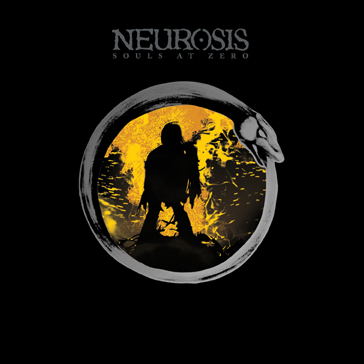
Neurosis - "Souls At Zero (Reissue)" (2011) [Neurot Recordings]


Few and far between is the band who comes along to change the way music is made and thought of forever. Neurosis is most definitely one of those bands; through a tireless DIY work ethic and soul searing introspective way of writing (and thinking), they are undoubtedly one of the world's most top-tier musical projects. Whether you agree or not, Neurosis is one of (if not the) most important extreme artists to emerge in the last 30 years. Souls At Zero was their first foray into the trademark musical path that they are now so well-known for. Eschewing the more hardcore punk/crust stylings of their previous releases, SaZ found the band adding more psychedelic, restrained and contemplative musical excursions. 

A mind-warping musical explosion is what you shall behold. Wild yells, enveloping rhythms, catchy but heavy melodies and pure, unadultered honesty is abound on SaZ. While not completely abandoning their roots (there is quite a few manic, aggressive moments on the album) their introduction of clean guitars, odd samples, slowed down rhythms, experimental instrumentation (keyboards and cello anyone?) laid the ground work for many musical artists of the future. Undoubtedly, the post-metal and experimental metal genres can be inextricably linked to Neurosis. While SaZ is not as refined and percise as many of their future works, it shows a young band full of energy for one singular thing; to create art unhinged to anything in particular. This album moves and flows to many places that were mainly unexplored by many metal artists (and yes, this is metal - much like Neurosis in general). Even ideologically Neurosis began to touch on things in a different light; heathen spirituality, personal development and life in general. All things that would continually be built upon in the future.

This is the cornerstone album for Neurosis; everything before SaZ built up to it and everything after continued to build upon it. Slowly refining and shaping what they would come to be known for in the music world. If you want to see the less refined (but no less brilliant) beginning of what Neurosis came to be, SaZ is the exact place to start. A masterpiece of musical art that no artist before or after can ever come close to replicating (or topping). Words cannot express the brilliance that is Neurosis. If you have never heard this album, immediately stop reading this, go buy the new re-issue and be prepared to have the way you think and/or listen to music changed forever.

-E.

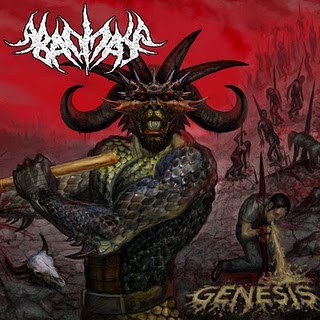
Abacinate - "Genesis" (2011) [Epitomite Productions]


Deathcore. The mere thought of the word creates grim faces and has people choosing sides to what their opinion of it is. Granted, most of deathcore is absolutely terrible music (much like its predecessors - metalcore and nu-metal), there is always a golden nugget or two to be found in the heaps of 'artistic' trash (as is the same as any other genre of music). I personally enjoy some deathcore bands (The Faceless, Within The Ruins, August Burns Red) but cannot stomach most of it (I am looking at you Emmure and Winds of Plague) because so much of it is devoid of emotion, song writing ability and all-around creativity. The typical garbagecore band has three types of musical moods in every song - blast, breakdown, thrash/melodeath - and repeats said parts over and over until uncontrollable projectile vomiting has occured...but I digress.

Abacinate is another band who does nothing but continue to dump on a genre of music who already has virtually zero integrity or respect (except to bros, meatheads and Top Hopic goons). Its dumbed down death metal, complete with a bro-style mentality, pointless songwriting, childish 'brutal' lyrics, uncreative riffing and tons of derpy breakdowns (punch the floor bro). They seem to try and disguise their deathcore-ness as gore/grind/death but one listen to this album will surely dispel that lie immediately. Sure the production is nice and clean/tight and the artwork is a great reminder of pure Photoshop fail, but who cares. A turd is a turd, no matter how much gold is poured over it.

I gave this album a few spins to try and see if there was something I was missing, but sadly, I missed nothing. Truthfully, the album artwork should have been enough of an explanation to what was inside; a demon plunging some random goon, while Colt 45 bottles, Busch cans, fat white trash women wrestle, people eating White Castle, impaled humans, people vomiting, etc...Yeah. Waste of time. 

If you want something completely thoughtless to thrash to, this is up your alley. If you want music with soul and talent, look elsewhere. Go listen to Defeated Sanity instead.


-E.

Thursday, March 10, 2011

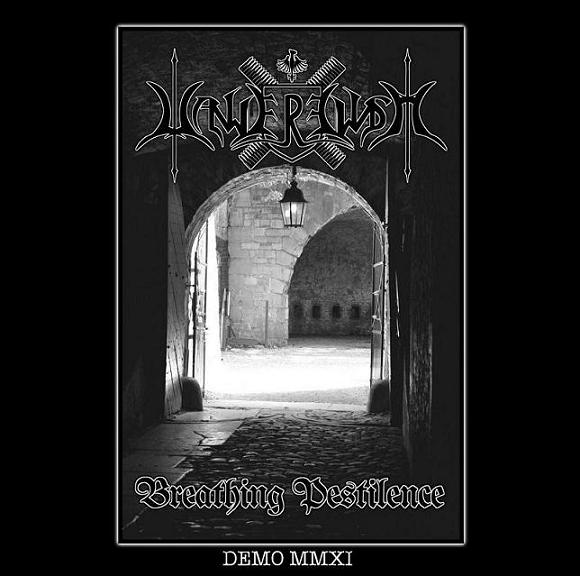
Wanderlust - Breathing Pestilence (2011) [Self-Released]

This is a project by our own Elan ! This is a short 4 song demo and for a first time release this should not go upon deaf ears this is a killer listen !
The sound is lo-fi but with quality ! This demo packs a punch with its mixture
of Norwegian Black Metal vibes and Belgian Black Metal influence. With the lyrics being focused around Belgian history the music and atmosphere there is a lot of heart and soul put into this demo. 

A great Satyricon influence dwells within these 4 songs as well as some old school Darkthrone influence but to the point where it would make the demo sounds like another carbon copy. The riffs are pretty standard with the tremolo picking and chord progressions and the drumming I think is the most vibrant out bursting interment on this recording. 

The Opening and Closing songs "Breathing Pestilence" and "Stone White Gods" take the cake for the best songs out of the 4. Do your self a favor and give this demo a listen. 


-Bjørn

Wednesday, March 9, 2011

Interview with C. Alcara from Stroszek/Frostmoon Eclipse


Thanks so much for the interview - as you can tell by my previous review of the Stroszek review that I am an avid fan.


You're very welcome, I am a constant reader, so we draw, ahah!

I've noticed that you are very interested in the Americana style of folk; as a resident of Italy how do you view American-tinged folk?


I always try to think that no matter when you live, music can give you feelings. I felt a natural attraction to american folk since my early twenties. Right now I am listening to Townes Van Zandt, which is pretty unknown in Italy by the way... I had to search stuff on my own because very few guys here know about Mickey Newbury or Jim Croce or even Tom Rush. As you may have noticed, Italy sucks musically speaking (and not only).

Now, for those of our readers who for some reason don't know, you also play guitar in Frostmoon Eclipse (who recently put out a sweet album on Osmose, I might add). Do you keep your influences for Frostmoon separate from what influences your Stroszek material or do you have one big base from which you draw influence for all your music?


When I start to compose something, or better when something get out of me, I don't really have in mind if it's for a band or another... songs just work themselves out. But my songs have all the same "soul" in the end and sometimes is just a matter of sound, and whenever you play it electric or acoustic it could fit here or there.

A few years ago Frostmoon Eclipse went on a US tour though, sadly, I was too young then to attend the Chicago show. What was your overall experience on tour in a different part of the world? Would you ever consider coming back here for musical endeavours?


I really hope to come back someday. Unluckily it will all depend on promoters and stuff like that, so if you American guys will like the new album there may be a chance, ahah... First time was ok, we met a lot of friends we only knew from emails, saw nice places like the Smoky Mountains and played with great bands every night like Chaos Moon and Benighted In Sodom, and Velnias for 3 gigs. I got ill quite immediately so my mood was quite down, but wait, I am down all the time, so that's ok, ahah.

Your more recent Frostmoon Eclipse material (especially Dead and Forever Gone) has a very distinct grunge feel to it. Is this intentional or entirely happenstance?


I don't really think about labels for music, I think it may just be good or bad. "Grunge" was a kind of magazine invention, is all (indie?) rock to me. "Dead And Forever Gone" is an album I am really proud of and was a sort of starting point for the whole Stroszek-thing. After it was released I knew it would have been impossible for me not to follow that path 

What is your writing process like for Frostmoon and Stroszek material? Does it differ between bands?


I think the most important thing in music is "the part you throw away", to say it with Tom Waits. I really throw away a lot of stuff when writing, because I always try to keep what I feel is the best. Many music out there sounds just unnecessary to my ears. I just try to keep the best stuff because every song I record could be last one. 

You've been a part of Frostmoon Eclipse from the very beginning in 1994 - how do you feel it has evolved as a band? Does it feel any different than before?


I am not just a part man, it's me who formed the band back then and wrote all the songs, so I am the real guilty one, ahah... Seriously, I think we got better with time, not only technically, but we also developed a sort of our own style, which was my main reason to do this... I just wanted to do my own thing.

What outside of music influences the way you write music?


I would say mostly books, lot of Cormac McCarthy stuff going on in my lyrics. Or maybe movies, the song "Turn the sky to winter" is somehow inspired by "Jeremiah Johnson"... and we had samples from Herzog's "Stroszek" on the first album, there must be a reason if I took the band name from there. Even the feelings you get walking outside can be an inspiration, this city is so very depressing, so it's not very hard to get a "creative mood".

How are things in the Italian black metal scene? Has it been kind overall to Frostmoon and Stroszek?


I have to say that usually bands do receive a far better support from their own country. But I don't like to complain, since from day one I had little if any interest at all in italian scene. And by the way I prefer to "address" my stuff to individuals, guys like me, who like to search and listen bands on their own, regardless of what is on the TV or on the magazines. 

Where do you see yourself musically in the next 5 years?


As my friend Townes would say: "Waiting around to die". Surely I'll be older. But I can't even see myself tomorrow but let's see what happens day by day...


Be sure to check out Frostmoon Eclipse's new album "The End Stands Silent," out now on Osmose Productions, as well as a new Stroszek album on the way!


-Jon
Related Posts Plugin for WordPress, Blogger...