Friday, January 27, 2012

Windy & Carl - "We Will Always Be" (2012) [Kranky Records]

Dreamy drone duo Windy & Carl are truly one (two?) of a kind. Where so many shoegaze-inspired dronescape bands have fallen flat, Windy Weber and Carl Hultgren have soared ever higher. With an incredible amount of full-lengths, collaborations, 7"s and so on, a two year silence after Instrumentals for the Broken Hearted, a tour-only LP featuring instrumental takes from their Songs for the Broken Hearted album, created a horrible illusion of doubt as to whether or not Windy & Carl would return from their slumber. Emerging from the great beyond sometime last December, this sleepy Michigan duo announced their stance with the title of their magnificent new album, We Will Always Be.

Windy & Carl's music has always existed somewhere high in the stratosphere, where the sun shines with extra brilliance and the moisture in the air begins to crystallize, bending the light into gorgeous arrays of perfect color, and We Will Always Be continues their glorious tradition. Hultgren's pillow-soft washes of guitar find themselves at their absolute finest, and when coupled with Weber's "cough syrup-drenched pop" bass lines and hushed voice (which almost sounds like she's whisper-singing directly into your ear) seemingly echo thick, cottonball clouds on the sunniest day of the year. We Will Always Be's sunny disposition could be perfectly summed up as that perfect moment after a picnic when you lay down on your blanket, surrounded by fluttering dandelion fluff, and look up at the sky, only to notice that it is the most beautiful shade of blue you have ever seen, and even the clouds and birds seem to be in awe of the sheer perfection this atmospheric anomaly has given. You then remember you are not alone on this blanket, and you spend the rest of the day picking out shapes in the clouds above. Sappy, I know, but We Will Always Be is filled with this sort of unconditional, loving adoration; a perfect "pick-me-up" after the lovelorn shimmerballads of Songs for the Broken Hearted.

Windy & Carl's long-awaited (well, not "long" awaited, but it certainly seems that way, return) is nothing short of sonic perfection. We Will Always Be is a testament to sheer contentment with one's life, a state where one does not need any more than his or her mate and the world around them, which makes me begin to wonder. Maybe We Will Always Be is more than just an album title...maybe it is Weber and Hultgren's own love letter to each other, with the music acting as the world's most glorious post-script. We Will Always Be will see it's release on Valentine's Day (how fitting) via the excellent Kranky Records.

-Jon

Jason Urick- "I Love You" (2011) [Thrill Jockey]


I Love YouAs you awaken inside of your own head, you realize you have no recollection of who you are and what you are doing. Your identity has been erased from history and you now possess the freedom to roam unbothered within the realms of your mind. As you traverse across the universe reconstructing how it is you interpret life internally and externally you begin to recall who it was you once were. The freedom you possess within yourself has realized your full potential and you fear returning to your conscious world. It is here where your fate begins and ends and it is beyond the day to day repetition, endless streams of questions, and looking towards the future that perpetuate our lives. It is about simplicity within yourself and your relationships with people and nature that breathes life into all of the things you do. You awaken to realize that you have nothing to fear consciously because here you have the same power to control yourself entirely and nothing from the past, present or future can take that away.

Jason Urick’s I Love You sounds like journey of self realization, using heavy ambiance to set a dream like mood to the entire trip. The album is composed of five average to semi-long tracks of low ethereal drones with small explosions of heavenly disembodied tones scattered amongst the clouded layers of sound. Urick has managed to incorporate influences from what sounds like eastern music without sounding like it has been done before by maintaining the primary atmosphere set at the beginning of the album. Although the songs drone a single idea for their entirety, the idea is rephrased throughout the song in hundreds of ways so you are never quite listening to the same section over and over.

This is the kind of album one could put on repeat for twelve hours and just think endlessly of all the possibilities the universe has to offer. Jason Urick fills all the corners of your speakers with gorgeous loop after loop, painting murals of sound that are entirely open to interpretation by any listener. Within the space created in your speakers, please get lost.

-Julian

Tuesday, January 24, 2012

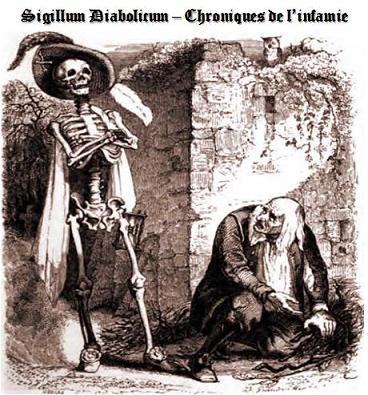
Sigillum Diabolicum - "Chroniques de l'infamie" (2010) [Thor's Hammer Productions]


I originally came across this by browsing around and finally coming to this awesome album art. I am a huge fan of the whole woodcut/etching styles and found the art to be quite appealing. That, and they're French. French black metal has a good track record with me.
So, I did what any normal person with a semi-decent salary and bizarre interests does... I made an impulse buy. I judged this one by its cover.

After receiving this album in the mail today, I am absolutely floored by how incredible it is. And boy, did it take me for a spin.

The intro to the album is an actually humorous and twisted circus-like soundscape of machine guns going off while goofy music is playing in the background. Quite a surprising start. One would think the rest of this album would be as 'laidback'.
Second track? MINDBLOWING. I wasn't even done with the song before I decided that I wanted to listen to it again. With throat-ripping vocals pouring themselves out into an ominous echo, melodic and perfectly-layered guitar passages, and drumming that keeps the rhythm 'hooky', I was pleasantly surprised with every turn.

Oh, there's bass, too. Imagine that.

The consistently glorious nature of this album continued throughout the entire freaking disc. With original musicianship, blisteringly fast technicality, melodious and memorable riffing, and very scarcely a dull moment, this entire album is nothing short of inspiring. 
This is the epitome of what I look for in an album... underground, overlooked gems with a wonderful visual and audial presentation. I may have no idea what the lyrics are, in all humility, but the nihilistic, yet melodious nature of these recordings speak well enough to me in a language I can understand. That and the medieval-modern crossover artwork bring out the visual leniency that brought me to this album in the first place.

Not even my biased review can do it justice. Just order it. 

...Not on eBay, though... as indicated on the back cover with an x'ed out eBay logo next to their label information. 


-Elan

Sunday, January 22, 2012

Prurient - "Time's Arrow" (2011) [Hydra Head Records]


It’s good to see an artist that’s known for a more traditional approach to noise branching out into something that undoubtedly flies in the face of all noise conventions.  But, when does a trope become a schtick?  With the release of Bermuda Drain, I was really excited to hear a piece of music that was simultaneously intimidatingly melodic and fearsome.  This ethos is carried over in to Time’s Arrow well, but in a way that makes me fearful of what the future holds for Fernow and his compositions.  This EP feels like studio B-sides for Bermuda Drain, in that the first few tracks could have come from that album and I’d know no different.  I guess it’s just my appreciation for the approach that’s evinced on both albums that makes me apprehensive.

Time’s Arrow is a solid listen for an EP. While you won’t sit down to read and drink tea or have a nice conversation over Maskless Face or Slavery in the Bahamas, other tracks on the EP provide a more structured counterpoint that makes the hammering industrialized noise stand out as an excellent genre example.  While I can see a method to Prurient’s madness, I can only hope that it doesn’t devolve into a copy and paste effort that lays down hefty synth lines over metallic drumming and spoken word abstractions.

-Brandon

Adrian Aniol - It All Falls Apart (2011) [Utech Records]

To be honest, I've heard a lot of "dark ambient," and it's a genre that really tends toward the mediocre and the nondescript. It can still be nice, but it's not impressive. Worse yet, half of it sounds like half-assed sound design from a computer RPG. Adrian Aniol's on top of the game here, though.

It All Falls Apart has all the important hallmarks of a fairly traditional dark ambient record. It's huge, amorphous, and threatening, like a nightmare you can't explain that leaves you shaken half the day. While there's a feeling of pitch, it partakes more of Ligeti's pitch-saturated sound masses than anything like melody or harmony.

And just when that, wrapped around disconnected rhythms and waves of intensity, becomes grey, Aniol moves to the piano and begins to evoke.

It All Falls Apart doesn't quite escape being dark ambient, but it does a fine job of expanding the horizons and nailing the atmosphere.

Then (at the risk of fawning), Steven Hess comes along. Side B of It All Falls Apart is a Steven Hess remix. So what, you say, anyone with a name can throw together a quick rearrangement on a laptop and make some cash. Sure, and most of them do a fucking fine job too. Hess, however, opted for the tape machine.

The tape machine.

We might have to do an entire interview based on that sole fact. The sheer amount of time, work, and potential for complete fuckup of doing a remix with pieces of tape is a perfect reminder of why there weren't five hundred records of inept loners every day until everyone could do everything on a home PC.

I'd also like to add that Hess takes the material and makes a completely different track with all of the same atmosphere intact and still engaging. Each half of this tape could stand on its own, and I'd buy it. Seven bucks for two great releases, just go do it. Go.

-V.

Friday, January 20, 2012

Gnaw Their Tongues - "Per Flagellum Sanguemque, Tenebras Veneramus" (2011) [Crucial Blast Records]

A combination of unemployment and a month and a half long school break means one thing: slasher films. Though I'm not a violent person by any means, I've always been drawn to them. Maybe it's my own way of confronting silly irrational fears, maybe I enjoy the schadenfreude of knowingly watching a D-list movie, rifled with ketchup and "flesh-colored" putty galore, but, either way, from the first time I knowingly viewed "Friday the 13th" at the tender age of 11, I was hooked. My one consistent annoyance with these films are the abundance of less than satisfactory. I know, I know, B-list movies warrant a terrible soundtrack, but when watching something as demented as the original Last House On The Left, I was sort of expecting something a little more faux-chilling than goofy, lighthearted Casio etudes. The closest to "oh wow, that's kind of eerie" horror has ever gotten is definitely Harry Manfredini's "ki ki ki ma ma ma" from the Friday the 13th series, but that was even done to death. Horror needs something...fresh, something truly horrifying to fit the nightmarish intent of these movies. Has anything brought enough intensity to a film since Kubrick's brilliant adaptation of Bartok as a soundtrack for A-lister The Shining? No. Never. However, maybe filmmakers should start turning to Dutch madman Maurice "Mories" de Jong for a new, much more fucked sound direction.

Even with twenty-eight releases under his belt (for this project alone), Gnaw Their Tongues still hasn't lost it's horrific edge. A noise-inflicted, sadistic nightmare of blood-soaked sexual freedom and hedonism, snuff film and gore-obsessed Mories drags his listeners further into his tormented mind. Heralded by demonic orchestras, thick, eardrum-stabbing bass, free-jazz inspired percussion, and the most harrowing of torture samples, the religiously inclined (Gnaw Their Tongues is taken from a rather masochistic bible verse) Per Flagellum Sanguemque, Tenebras Veneramus is a meditation in unspeakable, de Sade-esque horrors, whether it be "Urine-Soaked Neophytes," "Bonedust on Dead Genitals." The tormenting, droning doom metal found on this album, by far Mories's crowning achievement thus far with the Gnaw Their Tongues moniker, are rife with haphazard atonality, carefully crafted textures, and an expansive, Lustmordian gait that previously had yet to be achieved with such a minimally-inclined genre. This is true horror.

A testament to the ever crumbling psyche of a sexual sadist, Per Flagellum Sanguemque, Tenebras Veneramus is one of the most chilling, mind altering albums I have ever heard. Though Mories has yet to release any lyrics at all, there is no doubt that this phantasm of an album is rife with rape obsessions, immense gore, and the stream-of-consciousness ravings of a madman. Fuck your movies, if you want to experience true fear, true madness, take Gnaw Their Tongues for a spin. Soon enough you'll be making snuff films of your own.

-Jon

Tuesday, January 17, 2012

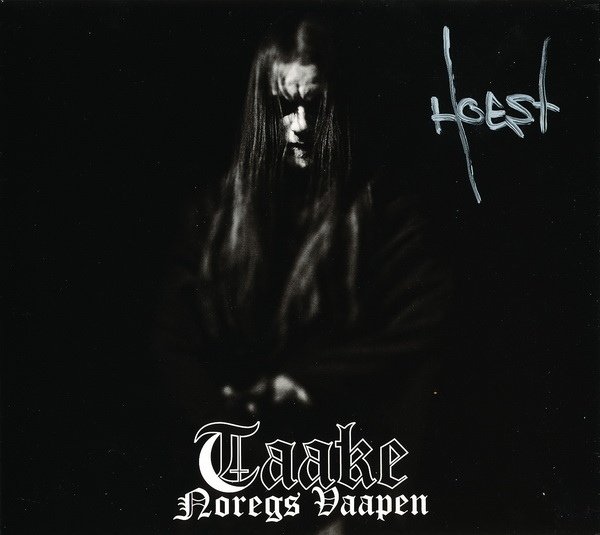
Taake - "Noregs Vaapen" (2011) [Dark Essence Records]


In my opinion, Taake has always been one of those bands that releases albums that are either huge hit or moderate miss. Every few years, Hoest seems to come up with something that is musically fascinating.
Never faltering, though, is the spirited nature of his music and the 'audial patriotism' which ensues. 
Thankfully, the latest offering is more 'hit' than anything I have ever heard from him.
In what I'd like to note as his most majestic, powerful, and original work yet, Noregs Vaapen has it all and then some.
Featuring a solid and unwavering mix of melodious guitar hymns and primitive riffs, this is what I believe to be Hoest's magnus opus.
And you know what? There is a banjo in some of the music. I'm serious.
A banjo. I was just listening to the music and then all of the sudden.... 
"Hellig skit!
Hva faen?!?!
A BANJO."
I'm not entirely sure who played it, but it flowed perfectly. 
Also appearing is a plethora of musical guests, including the prolific Nocturno Culto from Darkthrone.

This album has verified to me that black metal has solidified itself into the history and facet of Norway in today's international society. Like it or not, the world has no choice but face the fact that the very spirit of their country is being represented and distributed in the form of this esoteric sort of music.

And what way to represent that but with the mark of a monolith of a memorable album?

- Elan

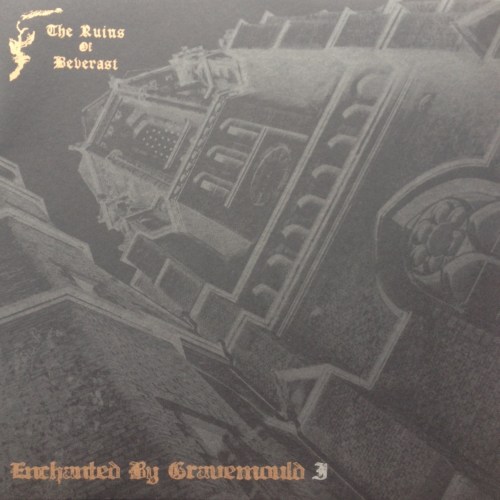
The Ruins of Beverast - "Enchanted By Gravemould" (2011) [Van Records]


Alright, I know you all have probably noted my most recent reviews and think I have this unshakeable bias toward Van Records, and think that they cannot release a bad black metal album.
You are absolutely right.
The Ruins of Beverast is a band which holds special room in my disturbed psyche. 
Mr. Meilenwald's apocalyptic and gloomy sound has engraved itself into my brain. This new EP is a collection of his more obscure works of his from split albums and includes covers of some very surprising tracks.
Listening to the differing production styles, it is apparent that his musical voice is very clear despite any vessel he utilizes to manifest it.

With all that being said, I know many of you are adamant about not buying compilations, EPs,
'best-of's, or the like.

But I must tell you... the variety and importance of this man's music is well worth any investment. Buy this album.
This man is making black metal better than 90 percent of bands today, and The Ruins of Beverast is an undeniably important name in underground music today.

-Elan

Monday, January 16, 2012

Sutekh Hexen - "Larvae" (2012) [Handmade Birds Records]

San Francisco trio Sutekh Hexen has received quite a bit of praise for their more than steady output of indecipherable, incredibly harsh black metal. Beneath walls of stagnant noise harsh enough to make even the mighty Vomir cringe, Scott Miller and Kevin Gan Yuen spun audio nightmares told at a speed almost as fast as their release output. Looking back on my review of their last release, the blistering Luciform, I had made a comment about Sutekh Hexen's brilliant decision to keep from evolving their sound, as their talent in this specific field needed no tweaking, and yet, with new addition Lee Camfield and a wildly progressive new album on the way, I find myself proven wrong.

After two years of grating gestation, Sutekh Hexen has emerged from the womb, and this new form is as glorious as it is horrifying. The newly birthed Larvae shows Sutekh Hexen moving out of the downward spiral that is "black noise" and bringing something new to the table; something ugly. While staying to their ruthless, churning, "more noise than metal" roots, Larvae marks the inclusion of something completely unheard of in "black noise" circles: musicality. Unlike previous albums, whose almost inhuman, mechanical performance was as expected as it was consistent, Larvae's embrace of brilliant, albeit subdued melodies, and chiming acoustic guitars offer a respite from the chaotic, tortured madness of their back catalog. This new found sense of epic melody does not keep Sutekh Hexen from their signature harsh sound, often pitting layers of noise against harmonic bliss, whether it be the heavy, metallic guitars and harsh noise walls of "Isvar Savasana" or the quiet, meandering neofolk and found percussion of "Let There Be Light"; Larvae is best visualized as a two-headed beast, each mouth ravenous for sustenance and dominance in a constant, all out war with no end in sight.

Sutekh Hexen have really come into their own with the simultaneously inviting and revolting Larvae. A brilliantly composed juxtaposition between the crawling chaos of noise and the brilliant luminosity of modern black metal, Larvae is not only a step forward for Sutekh Hexen, but for raw black metal as a whole. Larvae will be up for pre-order soon from the always stellar Handmade Birds Records.

-Jon

Thou & The Body Live Review - Las Vegas, NV

The sludge/doom onslaught in Las Vegas which had been going on last year returned for another night at Las Vegas’ metalheads favorite taco shop last weekend, this time featuring the likes of Thou and the Body, who are currently touring throughout the US.


Sunday, January 15, 2012

The Ritual Inclusion of Code - Beta Wave Nemisis (2011) [Small Doses]

There's a special category of artist I'd never quite realized existed until I began thinking about this release. They don't have a name, a manifesto, or self-serving documentaries. They're the "intellectual metal kid's noise artists."

I could certainly include artists like Locrian in this, and they may be a good entry point. They're great. They do half-black metal now, but back in the day they were the building, fulfilling wave of sound that you could find blessing scattered metal shows around Chicago. They're into noise, they're into metal, and they're not quite metal, so the metal kids think they're a noise band. (Just to be clear, they're not.)

20.Sv and Deadwood are the side of this I've never quite understood. They bill themselves as harsh noise. 20.Sv in particular had a big publicity stunt in the metal scene (see where I'm going with this?) getting allegedly declared a terrorist act in Lebanon. But while I've run into metalheads enthusing over these noise artists again and again, both Daniel Jansson (Deadwood) and Osman Arabi (20.Sv) make a sort of muted, almost ambient expression of soft, round static. They're quiet and soothing, even if you play them "loud as hell."

Locrian's labelmates on small doses, The Ritual Inclusion of Code is apparently a collaboration between Deadwood and 20.Sv. Alone, they always just disappointed me. Together, they make me think "Oh, I could do this on a laptop. And I wouldn't be proud of it or try to release it." Beta Wave Nemisis (do they realize that's a spelling error?) sounds like my early, incompetent noise project made halfway into ambient with Audacity reverb and delay. There are actually childish clean guitar noodles partway through, an example of aesthetic self-undermining that even I never stooped to.

Big names don't mean real music.

Wednesday, January 11, 2012

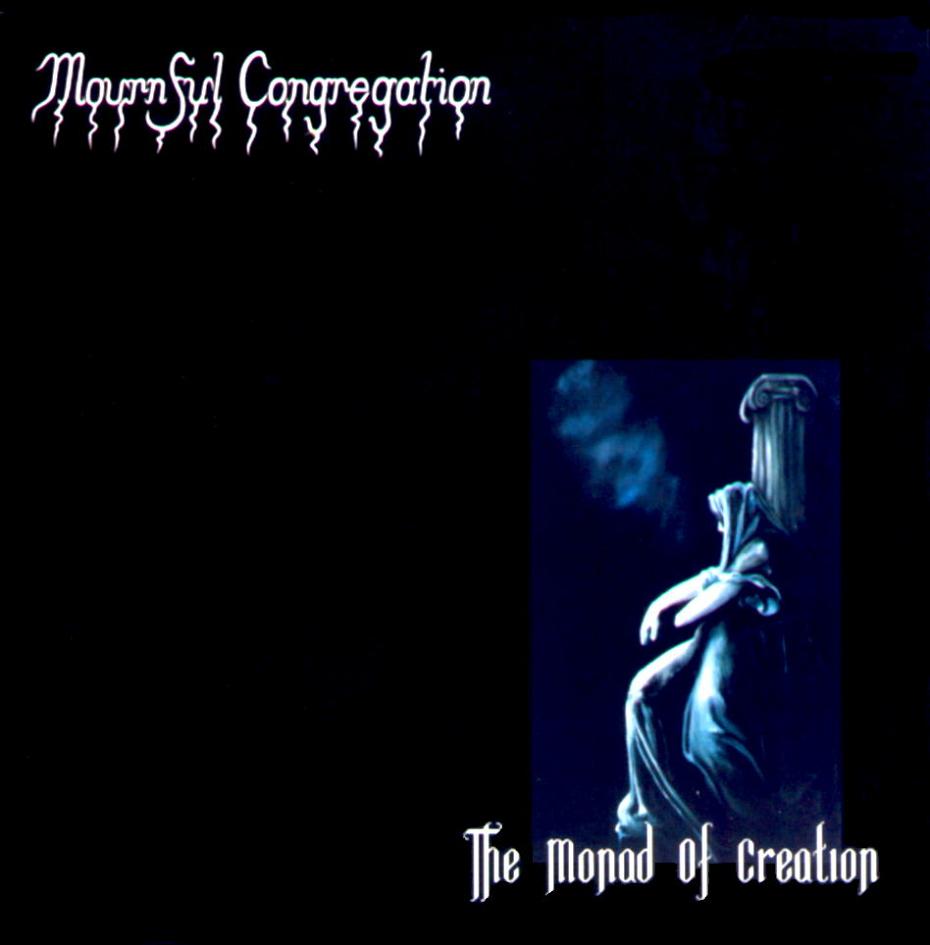
Interview with Mournful Congregation


2011 was a big year for Australian funeral doom masters Mournful Congregation. After releasing a collection of long out of print songs and what is easily their best full-length album, Mournful Congregation embarked on their first United States tour, leading up to the controversial (but, from what I've heard, oddly successful) Rites of Darkness III festival. In the grand scheme of things, a "best of" collection, a new album, and a US tour doesn't seem all that grand, but in the chilled molasses paced funeral doom sphere, this is as big as performing at Live 8, and it is well-deserved. It was an honor to chat with Damon (Adrian and Justin make appearances but, in the interest of time, Damon provides most of the answers) and hopefully one day the MC crew will find their way to the midwest. I can dream, right?


It looks like you'll be heading over to the US of A in a few days. Are you excited? What are your thoughts on the current Rites of Darkness III lineup?

Damon:
Yes, quite excited now that everything has fallen into place. There are a lot of friends/ fans/ bands I look forward to meeting in the US. The line-up for ROD fest seems to be rather amazing, so I’m expecting it to be great.

Why did you wait so long into your career to play live for the first time (in 2009)? Was this intentional or were there no feasible opportunities until then?


Damon:
It wasn’t exactly intentional to wait this long, and it was definitely never planned either. However, in the past we never had a full live line-up for the band, and we never cared too much for it. We were always content being a studio band. But it seems at the time the climate was right, and metal fans perhaps seek a new live experience, because everything else has almost been done to death within the metal genres. But the atmosphere created by Funeral Doom is still somewhat fresh I think, so we are now here to deliver that atmosphere the best way we can. It is also a new experience for us to play this music live, and ultimately it has been very rewarding so far. It’s like transcendental meditation with volume.

You've used a bit of religious imagery in your work, whether it be song titles ("The Catechism of Depression"), merchandise (the Mary statuette on the "Suicide Choir" shirt), or even your name, as Congregation is normally associated with a religious gathering. Is the concept of religion an important aspect to Mournful Congregation?

Damon: Whenever I have chosen artwork, or I have written lyrics, or chosen anything to do with the band, it has always been on an intuitive level. I’ve never consciously seeked out religious iconography. But I have noticed myself lately how we have infused this into our conceptions somehow. I was forced to go to church as a youngster, and while I don’t remember ever giving a fuck about the sermons, I do remember the cool sound reverberations within the church, the epic structure of the church itself, the epic pipe organ and the striking symbolism associated within it. I think I have used those influences to tailor it into my own mould, since really, that vibe and style transcend religion to me.

With such long, dense compositions, how do you approach the songwriting process? Is it more linear process with harmonies added afterwards, or do you compose in a more vertical, wall-like fashion, with all harmonies and counter-melodies added as the song progresses?


Damon:
Generally speaking, most harmonies are written together in the same sitting. Oftentimes the basics of a riff or chord structure will sound average to me, but once I have added all the harmonised parts it comes to life. Other times, if a riff seems strong enough on its own, I will leave it at that place, and perhaps a harmony will be added later if it is decided it is needed. So really we work in both ways, depending on what is initially delivered.

With funeral doom still in its early, EARLY stages on the other side of the world, what drove you to start making slow, depressing music back in 1993? Did you think the style would catch on like it did? More importantly, did you envision the project would still be active almost twenty years later?


Damon: I must put my mind back to those days to remember, haha. Well I guess in those days Doom wasn’t so unpopular….in fact Doom was big, with bands like Cathedral, My Dying Bride, Anathema etc. sitting alongside Cannibal Corpse and Deicide etc. But at the same time we were influenced by the total underground scene, buying demos and tape trading, so we heard everything that was on offer back then, not only the CD’s available in stores. But I seriously think my craving for writing Doom music came alot earlier. I always had a fascination with slow brooding music and the way it could alter ones mood somehow. So it was quite natural for me to start writing in this style. I don’t even know if the style has caught on more than it did back then, but all I know is that I have been, and AM dedicated to writing in this vein regardless of what happens around it.

This one's geared more towards Damon - Since you are in so many bands (Cauldron Black Ram, StarGazer, and Misery's Omen, to name just a few), in what standing do you consider Mournful Congregation? Do you treat it more as your main project, a side project, or are all your bands of equal importance?


Damon:
It comes down more to the fact that within each band our roles are different. With Stargazer, I play bass guitar, and The Serpent Inquisitor writes all the guitar riffs/ songs first, which I then work on for bass. With CBR, we both write riffs/ songs as they come. With Mournful I can write and craft the songs as I need to. So it all comes down to what mood/ inspirations are happening at the time as to what I work on. But to me, Stargazer, Cauldron Black Ram and Mournful Congregation are all my main working bands. Anything else can be considered as not my main bands.

The obligatory equipment question: what does everyone's gear rig consist of? Feel free to list just about anything you can think of.


Damon: Nowadays and on the new album; Jackson Kelly guitar through a Bogner amp. I like to keep it simple. Natural valve distortion on the recording. Live I use a Boss Turbo Distortion pedal if no good valve amp is available. I have also used this pedal on most of the older recordings.


Adrian: Mapex - 2 x 22" bass drums, 10" and 12" rack toms, floating 14" tom, 16" floor tom. Sabian cymbals, mostly the AAX range. 16", 17" and 18" crashes, 16" China, 14" hats, 20" ride, 10" splash, Remo Spoke. DW pedals. Pearl hardware.


Justin: Gibson Flying V 1967 Re-Issue
Jackson Professional (w/Seymour Duncans)
Jackson Warrior (w/EMGs)
Marshall JVM 100w Head & Marshall 1960 A + B Quads
Dunlop Crybaby 535Q Wah Pedal
Boss DD7 Digital Delay

Were there any goals you wished to meet with The Book of Kings? Do you feel you met them? Is there anything you would change about the album?


Damon:
There were of course goals to meet in the sound. Things we feel lacked on previous recordings that we wanted to improve on this one. We met a lot of them, but already I am hearing things I wish to be improved upon for the next recording. So yes, there are things I would change. We spent 8 months recording and mixing, so we had to stop tweaking it at some point I guess.
As far as writing the songs themselves, I try to let them flow naturally and not let my ‘analytical’ part of the brain interfere so much with the ‘intuitive’ part. So there aren’t really set goals in what I write.

Justin:
We reached a level of complexity and emotion that we have been working at for years on The Book of Kings. Compositionally we arrived at something unique and visceral that can only be realized with a complete understanding of the music we write. Everything is in place and we can only hope that is received likewise.

I find it rather interesting (and enjoyable) that you chose to include a full "soft" song on the new album. Was this a new experience as a full band? Would you feel recording doing more material in this style?


Damon:
As I have stated a lot of times in previous interviews, we have written and recorded clean/ acoustic/ soft songs since the first demo. So it is not a new experience, it is just part of what the band has always done from the start.

With twenty years looming just around the next corner, where do you see Mournful Congregation in the future?


Damon:
I am trying to work that out myself right now. But my scrying technique is refusing to bear results.

Any closing thoughts?


Damon:
Nothing is particularly coming to mind. But thank you for the interview and the ongoing underground support. Hails.  


-Jon

Tuesday, January 10, 2012

Interview with Book of Sand


Book of Sand's unorthodox approach to black metal has been a personal source of interest from the digital release of his first album, How Beautiful To Walk Free, onward, with his most recent offering, the free-jazz-inflicted black metal opus The Face of the Waters, set to annoy and hopefully expand the horizons of many basement-dwelling black metallers. D.'s cheeky, honest answers are proof that you don't have to be a pretentious, self-important prick to make groundbreaking music. The Face of the Waters is available in super limited quantities from Antithetic Records. Expand your mind.


With your earlier material under the Book of Sand moniker ("How Beautiful It Is To Walk Free" and "Destruction, Not Reformation"), there was heavy emphasis placed on your anarchist and feminist social leanings, but more recently there has been a lack of any sort of philosophical and/or social connotation to your music. Are those still a part of Book of Sand or have you distanced the project from those ideals?

Since I don't print my lyrics, all one has to go from are my song titles, album titles, and comments about the releases. And so I can see why you would think that;  you're certainly correct that my titles aren't as strident as they were. But, I still approach the band's world from a political perspective, even with the more abstract and theologically focused themes.  For example, The Face of the Waters is an anarchist look at the Judeo-Christian creation myth in the first two chapters of Genesis.  It was interesting to me that the hierarchical division of the cosmos starts at the very beginning of one of the core cultural narratives of our society: all of creation is quickly sorted into dominant and subordinate classes, with man having dominion over the other living creatures of the earth in Genesis 1:26, and over woman in Genesis 2:20-2:24. This commitment to inequality is deeper than religion, of course. Seems like most of the dipshit Satanists in the black metal world have pretty similar political beliefs to conservative Christians.

Anarchism, radical feminism, so on aren't "social leanings" as much as political convictions. There's a tendency in some circles to dismiss anarchism as a punk lifestyle choice, but that's not really correct. Rather, it's a political framework for understanding society as it is, and an idea of what society could and should be. I try to live in line with my politics–veganism, trying to not be a racist/sexist/homophobic shit-head–but the politics come first, not the lifestyle or the aesthetics/image.


So, I still consider Book of Sand a political band, and my politics haven't changed.

In previous correspondence you had mentioned that Face of the Waters is your first fully-composed album. How do you feel shifting from a chaotic, improvised setting to something more pre-meditated?

All of my albums have been composed, but each before this one had some space for improvisation.  HBtWF had those guitar solos, Destruction, not Reformation had a cello solo. TFotW has no improvisation, although I kept a few lucky accidents. I'm equally comfortable composing parts and improvising them, and so I do whichever is necessary for the specific situation. And, I think the composition has ended up at least as chaotic as the improvisation.

When one is improvising, to some extent one is bound by habit. Composition offers the chance to do something that's not natural.  As long as one isn't lazy, composed pieces have the potential to be stranger than improvised.

I do play freely improvised music also, but Book of Sand is overall composed music. So, the improvisation in Book of Sand is within a compositional framework and serves primarily as another compositional tool. Some of my songs are based on riffs, some are textural and improvised, some are written with random number generators. I'm not committed to any one way of working.

What are your thoughts on the seemingly standardized compositional methods in extreme metal? Who do you feel are exceptions to these methods who should or could be used as a paradigm in the future?

Who cares! This week, as far as metal, I'm listening to Bathory, Manilla Road and The Wounded Kings.

I guess you're asking me to recommend some weirdos? Wrnlrd is amazing in every way, and I'm also impressed by Portal and almost everything released on tUMULT. But it's silly to have a problem with "standardized compositional methods" on the one hand and to look for new "paradigms" on the other–the most common compositional structures in metal nowadays were new paradigms not so long ago. It doesn't matter what compositional approach one uses.  If the music's trash, it's the fault of the songwriter, not the method. There are still plenty of great diatonic verse/chorus/verse songs waiting to be written.

Unlike harsher previous releases, Face of the Waters is surprisingly "clean." What made you decide to trim Book of Sand's rough edges?

For that specific album, a clean sound was better to get the right atmosphere and feeling.  Nothing more than that. Each album needs its own sound...

Still, I try to keep a raw approach even when the sound is clean. I almost never do more than one take, and if I make a mistake I generally leave it. I can't stand the modern "black metal" sound, with perfect clicky/triggered kick drums, mid-scooped guitars, synthesizers and so on.  A more natural approach is preferable.

After the extremely experimental leanings of your latest album, do you still consider Book of Sand to be a metal band? Or is it something completely different?

It doesn't matter. The atmosphere and the feeling within black metal are what I like, not the specific techniques;  it's not crucial to me that my music have blast beats and tremolo picking.  I try to keep that weird, eerie ambiance, but of course that's not only found in black metal.

To me, Skip James, Jandek, Sun Ra, Sofia Gubaidulina, etc also have that quality, as strongly as any of the black metal greats. I don't privilege metal over other forms of music. The feeling is what's important, and I'll use any genre I need to in order to try to grab it.

That being said, I still think my latest albums are black metal.  The vocals and some of the guitars are genre-appropriate, at least, and I'm at least as misanthropic as your standard kvlter.  "Black metal" is nowadays more of a marketing slogan than anything, anyway…

Do you see Book of Sand moving further into the avant-jazz direction presented on this album, or will it move back into the more traditional (in comparison) vein of your previous works?

Both.  I have a lot of different musical interests, and I want to follow them all.

My sixth full-length is a collision between Javanese gamelan and black metal.  Still looking for the right label to release this one. Next, I'll be taking on lite-classical and then playing blues-rock.

I noticed a brief mention of a yet-to-be-released album, Mourning Star, on your Facebook. Are you still planning on having it released through Music Ruins Lives, or have things changed since?

As far as I know, it's still in the works with MRL. There should be more information about this in January or February. That album has had a difficult life.

Your previous project, the enigmatic, experimental funeral doom Light, has recently seen a full discography re-release from the killer Crucial Blast label. What brought this about? Will there be any future work with the project, or have you abandoned it for good?

I had sent a demo of my second Book of Sand album to Adam at Crucial Blast.  He was interested in doing something, and I thought he might find the Light albums interesting. He did, and so we did the re-issue. I'm quite pleased about it as the initial releases were very small quantities, and Adam did a really nice job with the packaging.

We had decided early on that Light would only do three albums, and so that was it.  There won't be any more releases from Light, but I do expect to revisit the style. I'm still particularly proud of Worse than Anyone would have Expected, and I don't think I've reached the potential within that sound.

Emily, my bandmate in Light, is now playing drums in a crust/doom band called Ashen (Minneapolis), if you're interested in checking out what she's up to.

-Jon
Sky Burial Double Review

It's that time of month.
Sky Burial - Aegri Somnia (2011) [Utech Records]
Aegri Somnia is beautiful. Something about the packaging (the intricate art? the near-wordless approach? the self-containment?) is the sort of album you want to keep in a carefully hidden wooden box. It's a treasure.
. . . That said, that's not the reason I put Aegri Somnia in my top-2011 post. It's not the only time I've heard saxophone mixed into ambient/drone music (I live in Bruce Lamont territory), but it's definitely a favorite to date. Sky Burial creates the wide-open spaces of Tibetan mountaintops without the lazy empty drone of some records--Aegri Somnia takes the meterless pulse of Sunny Murray's best work and opens it to the space of ritually powerful ambient space. Nik Turner obliges just as well. His weaving, soaring saxophone lines really come across as the spiritual aspect of prayer, flying frequently from low register up into altissimo ululations.
Aegri Somnia never feels like leaving, so as I do when I'm listening, I'll move on to

Sky Burial - Threnody for Collapsing Suns (2011) [small doses]
Threnody for Collapsing Suns is like the antidote to Aegri Somnia. While it works in much the same way (without, of course, Nik Turner), the resultant feeling is mourning. Throughout Threnody for Collapsing Suns, you can feel the abstracted mourning of the death of something with the kind of rarified beauty that can only exist far from air. Drones, whistles, hums, warbles, rhythms abstracted.
Fine showings over and over again.


-V.

Monday, January 9, 2012

Formication - The Eyes of Erodern Reviema (2011) [small doses]

I'm not going to set myself out as someone knowledgeable on the subject of electronic genres. Formication, however, is certainly not exactly the dark ambient music that it seems to be billed as half the time.
While they use dark ambient sounds, Formication is almost more rooted in an understanding of all of the more personal, private sounds that have formed in electronica over the years, from Coil's more esoteric works to dub, IDM, and even the distant, unsettling narrative of Gnaw Their Tongues. While maintaining a consistent atmosphere of almost brooding determination, Formication from track to track use distinct sounds and distinct rhythms, as if to re-use anything would be a waste of time in a creative endeavor.


This is the sort of music that should be the centerpiece of a roomful of dark-clad, silent young men, who disperse without a word but with a solemn bond at the end of the night.

Servile Sect Double Review

HEY GUYS, IT'S TIME FOR ANOTHER DOUBLE POST.

In case you couldn't tell by my various Servile Sect reviews, and Cathasaigh's inclusion of TRVTH in his favorite records of 2011 (in hindsight, it should have been in mine, too), we here at The Inarguable are big supporters of cross-country duo Luke Krnkr and Nhate Clmnt. Recently we've gotten our hands on two massive Servile Sect-related releases, and instead of clogging your news feed with a gazillion new posts, I'm doing another double review, because in this economy we need to conserve what we can. Right? Right.

Servile Sect - "Realms of the Queen (LP Release)" (2011) [King of the Monsters]
As I'm sure most of you have gathered, I normally don't review re-issues. Maybe it's the constant flow of new stuff, or maybe it's that the material had already been reviewed, but, either way, I'll admire the new artwork, nod, smile, and move on. HOWEVER, when I opened the LP mailer sent by KOTM's Mike Genz, I let out an audible "whoa." There was a TON of work put into this, whether it be the "no-wave record found in my older brother's closet" artwork done by website favorite Kevin Gan Yuen or the clear/glow in the dark splatter vinyl.

Before TRVTH was released, Realms of the Queen was my absolute favorite Servile Sect album. Unlike TRVTH, Realms of the Queen is a much more homogenized recording, bombarding the listener with a simultaneous assault of strange psychedelia and raw, mid-paced black metal. Slowed down, sluggish drum machines, extraterrestrial synthesizers, blistering guitars, inhuman vocals: this is still the Servile Sect you know and love, though maybe a little weirder. If you can get your hands on one of the 214 (weird number) copies, available at the King of the Monsters webstore, be sure to listen to it in the dark, and never, ever let your gaze leave your turntable. What an experience.

Sadness Saturn/Golden Raven - "Split" (2011) [Handmade Birds Records]
For a band as enigmatic and strange as Servile Sect, it is extraordinarily interesting to see its individual parts at work. When he's not collaborating with fellow experimental artist Joshua Convey in ITHI (who have a new album coming out soon), Luke passes the time with his own "psychedelic alien black metal band" Sadness Saturn, whose She demo and split with Utarm receive constant play in my basement, and, when not jamming with Ash Borer, Nhate conjures intergalactic demons with his trippy noise/drone solo project Golden Raven.

Opening up the split, Sadness Saturn's take on black metal is a tasteful mix of tradition and extraterrestrial meditations. Opening up with the slow-paced weirdo black metal "Impermanence in Chains," what was once structured suddenly breaks down into engine noises, electronic beats, and discomfort in "The River of Self-Destruction." Although raw, these two tracks still carry the round, aged sound of previous Sadness Saturn efforts, if not a little clearer overall.

The four tracks on Golden Raven's side took a little more digesting to get used to. The sounds found here, though melodious and "pretty" in a weird sense, are a representation of the immensity of space and subsequent insignificance of human life. Somewhere between drone, noise, ambient, and field recordings from the "Aliens" set, Golden Raven's bizarre soundscapes are the perfect companion to Sadness Saturn's harsher, metallic offerings.

This split tape is Servile Sect dissected in some lab beneath Area 51. Each half's space obsession is wholly apparent, though what Luke and Nhate bring to the table is that much clearer, revealing a hint of method to Servile Sect's madness. Only 100 of these cassettes were pressed, so be sure to pick up a copy while you still can. SVRRENDER, Servile Sect's companion piece and answer to their monumental TRVTH will be unveiled soon.

-Jon

Thursday, January 5, 2012

House of Low Culture - "Poisoned Soil" (2011) [Sub Rosa/Taiga Records]

Continuing my recent series of "soundscape"-oriented reviews is House of Low Culture's challenging, yet rewarding, Poisoned Soil. Originally a side project of former-ISIS frontman Aaron Turner, House of Low Culture's bleak, noisy drone has boasted members the likes of Jeff Caxide, Jay Randall, and the drone superhuman himself, Stephen O'Malley. After a three year hiatus, Turner reformed House of Low Culture 2010, this time as a two-piece with his wife, Mamiffer's Faith Coloccia. After three splits with Mamiffer and a collaborative live LP with Japanese noisemonger Merzbow, House of Low Culture released their first full-length, Poisoned Soil, on November 30th, 2011.

In the vein of more recent releases, Poisoned Soil shows House of Low Culture moving further away from its harsher roots, embracing elements of otherworldly, guitar-led post-rock in conjunction with punctuated periods of grating feedback and cavernous, subsonic drones. The three lengthy songs of which this album is comprised are an adventure in semi-improvised guitar manipulation, cranky samples and electronic sounds, Gamelan-inspired loops, and dreamy, soaring ambiance, no doubt a by-product of Coloccia's inclusion to the project. Between all of these elements battling for its own representation in the foreground, Poisoned Soil's shamanistic journey is complex, labyrinthine, and, at first, difficult to digest. However, after many nights listening to Poisoned Soil, though I still cannot completely grasp the inner, variegated complexities of the album as a whole, I find the even mix of claustrophobic noise and relaxing, ethereal ambiance presented in this album to be some of the finest work Aaron Turner has performed in the underground, experimental spheres he now calls home.

-Jon

Tuesday, January 3, 2012

Ural Umbo - "Delusion of Hope" (2011) [Utech Records]


I honestly have no idea how to categorize this album. As a "tag/genre nerd" who obsessively marks things as such on iTunes (553 separate classifications and counting), I've found Ural Umbo to be one of those bands whose tag area I have to leave blank. I mean, I could lazily leave them with a general Experimental tag like the one I've given this review, but sheer amount of ground international duo Ural Umbo have covered with their latest opus, the hypnotic Delusion of Hope, is enough to where I can suspend my near-obsessive anti-hobby.

I've seen quite a few reviews classify Delusion of Hope as a dark ambient record and, yes, at times, such as the eerie resonance of "Resinous Compound," there are elements of dark ambient, but, to be frank, this album is much too interesting to be classified as such. Now, don't get me wrong, I love Northaunt and Lustmord as much as the next (strange) guy, but your standard dark ambient album lacks the intrigue and immediacy set forth by the duo of Reto Mader (guitar/bass/kalimba/synth, also of Sum of R and RM74) and Steven "the busiest man in experimental music" Hess (percussion/electronics, also of Locrian, Haptic, Pan-American, et cetera). Songs like "Sych" give way to massive Tribes of Neurot-like tribal drum jams, and there are more than one occasion where Mader and Hess explode into mind-altering psychedelic jams and short, punctuated segments of analog noise. To put it lightly, this isn't your average drone record, or even your average record overall.

Ural Umbo's ingenious mix of aquatic unease with spectral dreaminess on the cosmic Delusion of Hope sets them on their own separate scale. Is it drone? Is it dark ambient? Is it noise? The hell if I know, but what is certain is that Ural Umbo is by far one of the most impressive, unique projects in the underground experimental scene. This stellar album is available as a clear LP + CD, limited to 300 copies, from the always fantastic Utech Records.

-Jon

Sunday, January 1, 2012

White Ring - "Hey Hey My My + Felt U" (2011) [Handmade Birds Records]

"Witch House" is a really hit-or-miss style. Though oOoOO's moody, Lucio Fulci-inspired gloom, Sleep Over's hazed electronic folk, and Salem's bass-heavy, gothic party music all call this newfound genre home, a more-than-steady flow of online mixtapes and compilations has shown "Witch House" to be, more often than not, awkward, hip teens with a keyboard, psychedelics, and an obsession with Microsoft Word's "webdings" font. Don't get me wrong, there are many gems, but, as research has proven, this "witchy" niche, which is already declining, making way for heavier, dubstep-inspired trash (icky), has been nothing more than a fad with a cool name. However, Brooklyn duo White Ring, with quite a few releases under their belt since 2009, has never failed to impress.

This two-song 12", released on the always-awesome Handmade Birds Records, opens with an odd, dreamy tribute to the one and only Neil Young. Though there is something to be said about a dark, electronic cover of rock anthem "Hey Hey, My My (Rock And Roll Will Never Die," complete with palpable irony, White Ring's incredibly deep, cough syrup-drenched homage is instantly memorable. Up next "Felt U," an original tune and a crowd favorite which took far too long to release. Again, the senses are bombarded with dreamy, drugged voices and enveloping synthesizers, this time accompanied with much more traditional, albeit minimal hip-hop beats. Is rock and roll dead? Vocalist K. Malia's shrine to Kurt Cobain might say yes, but, if anything, their cover only made things "witchier."

Hey Hey, My My + Felt U is the first release in Handmade Birds' White Label series and is available from their online store.

-Jon
Related Posts Plugin for WordPress, Blogger...